文章千古事,得失寸心知。
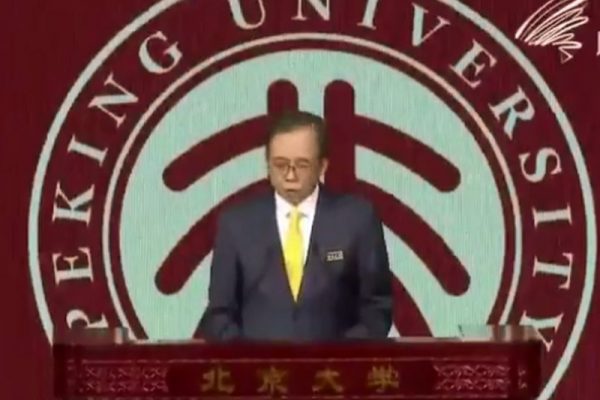
近日北大校庆,搞成了“北大笑料”。关于林建华校长在致辞典礼上读错字、发公开信道歉之风波,公众除了饭后茶余无奈地苦笑之外,更多的是感到一种莫名的悲哀,内心或许会引发出一种难以名状的痛 .....

It has been nearly half a century since the outbreak of the Cultural Revolution in the 1960s. This nationwide movement was fueled by ideologies such as “No Crimes in Revolution, All Justified in Rebellion,” a time when the most horrendous acts swept across China like tornadoes, leaving one of the darkest periods in Chinese history. The Cultural Revolution only came to an end with Mao’s death and the collapse of the Gang of Four. Since then, China has transformed from a poor and fragile country on the brink of collapse into the world’s second-largest economy. In the long shadow of Chinese history, fifty years is but a fleeting moment. As a Chinese proverb says, “falls as abruptly and rapidly as it rises.”
A Chinese party-state official once questioned the significance of commemorating the Cultural Revolution, noting that while the Ming Dynasty was unprecedentedly corrupt, it still lasted over 200 years. His point implied that contemporary corruption might not necessarily bring down the party-state and that overseas Chinese pro-democracy efforts could be futile. Yet history demonstrates that many dynasties rose and fell swiftly. The rapid rise and fall of the Taiping Heavenly Kingdom and the Kuomintang’s ouster from mainland China, for example, can all be traced to corruption. Internationally, dramatic changes in Eastern Europe, the disintegration of the Soviet Union, the collapse of the Soviet Communist Party, and recent transformations in the Middle East and North Africa all attest to the truth of the proverb: “falls as abruptly and rapidly as it rises.” Thus, the party-state could collapse without warning.
The dramatic changes in China have attracted the attention of scholars both inside China and abroad, prompting them to explore and interpret these transformations. Any dissenting voices, however, are often labeled “overseas hostile organizations” or “anti-China forces.” How the Chinese government addresses overseas patriotic acts, therefore, becomes a vital question—requiring openness, reassessment of old concepts, and adjustments to foreign policy. In this context, we publish this anthology in the United States: A Turning Point Long-Awaited in History — Retrial of the Cultural Revolution and Exploration of the Future. The book’s title reflects the authors’ perspective: authoritarian rule in China has persisted for over two thousand years, but a one-party dictatorship must end in the 21st century. By reflecting on the Cultural Revolution and contemporary history, a turning point can emerge. Our goal is not to expose individual wrongdoings or oppose the Chinese government, but to provide constructive suggestions for exploring China’s future path and development.
It is important to recognize and appreciate China’s impressive economic progress today. Yet throughout Chinese history, authorities have consistently attempted to showcase their “superior achievements” to mask a multitude of sins. The Qin Dynasty wielded a strong military to overshadow harsh laws and brutality; the Tang Dynasty displayed magnificent culture but suffered from corruption and border troubles; the Song Dynasty prospered economically but had a weak military; the Ming Dynasty achieved advanced maritime technology yet endured tyranny and eunuch rule; the Qing Dynasty controlled vast territories and enjoyed glory, but faced inequality, corruption, conservatism, and closed borders. While the achievements of each dynasty did not prevent eventual decline, their weaknesses inevitably contributed to their demise. Today, it is urgent for China to focus on its disadvantages rather than merely celebrate its successes. What are China’s shortcomings? Where do societal ailments originate? By treating world history as a mirror and learning from international experience, Chinese thinkers with dialectical, global, and historical perspectives can objectively and rationally analyze contemporary phenomena.
In light of this, Tianwen United Institute organized a symposium titled “Rethinking the Cultural Revolution to Explore China’s Forthcoming Development.” We selected excellent speeches and paper submissions to form this book, a collection that discusses the Cultural Revolution in two parts. Part I, History and Present, contains ten articles; Part II, Cultural Revolution and Study of Cultural Revolution, contains eight articles. These contributions are briefly introduced as follows:
“Will the Second Cultural Revolution Probably Take Place in the Future?” by Mr. Yao Jianfu, a retired researcher at the Rural Development Research Center of the China State Council, argues that China’s “Four Cardinal Principles” were a “lame reform” that could inevitably lead to a resurgence of the Cultural Revolution. He posits that such an event is likely if economic, political, and social crises reach a boiling point, with landless peasants and migrant workers as the main force. Mr. Yao stresses the importance of studying the Cultural Revolution carefully to prevent future tragedies. He advocates political reforms to achieve social justice and suggests that freedom of speech could alleviate social pressure. Mr. Cai Nancheng, with extensive experience planning and building museums in China, shares his expertise in creating a museum dedicated to the Cultural Revolution, providing candid insights into China’s social transformation.
Mr. Gao Falin, in Mao Zedong’s ‘Great Harmony Dream’ and the Cultural Revolution, examines Mao’s motivations. He asks: “What did Mao Zedong aim to accomplish? Did he seek to add elements to the Soviet socialist model? No. Mao wanted an entirely new socialist system. He sought to resolve issues no previous revolutionist had addressed: eliminating social classes and ensuring every citizen participated in community management.” He emphasizes that Mao’s vision of an ideal society permeated his entire revolutionary career. Mao not only aspired to be a communist pontiff but also envisioned himself as a tutor for humanity; at one point, he told Edgar Snow he merely wanted to be a “teacher.” Mr. Gao’s article illuminates Mao’s utopian ambitions and complex motives in launching the Cultural Revolution, providing invaluable insight for scholars and evaluators of Mao’s legacy.
Dr. Wang Guilan examines the Cultural Revolution through Yao Shuping’s novel The Land of Sadness, highlighting the brutality of the Red Guards and its devastating impact on Chinese education. She identifies three critical flaws in education: lack of general education, deviation from proper educational philosophy, and suspension of historical and cultural research. Dr. Wang urges educators to confront the essential question: what kind of individuals should students become? Her commitment to education underscores the necessity of reviving Chinese culture.
I contribute an article proposing that China should adopt a new perspective on culture and history through reflection on the Cultural Revolution. This cultural framework should be grounded in the Tao of the universe and faith in God. It encompasses multiple paths, including Tai Chi, Christian theology, Taoist principles, Zen philosophy, and Confucian human relationships. If China seizes this rare historical opportunity, it could not only revive its cultural heritage but also emerge as a global leader in a New Axial Age.
Mr. Ren Yanfang, in Tang Mo’s Death and My Repentance from his memoir Changchun Film Studio Nightmare—Reflection on Cultural Revolution and Repentance, recounts his youth, initially viewing the Communist Party as his “mother,” and details his spiritual torment during the Cultural Revolution. He exposes the political circumstances surrounding Tang Mo’s death and illustrates how Party ideology oppressed humanity. His honest reflections and repentance, written near the age of eighty, are compelling and deeply moving.
Ms. Li Ying, born in 1989, analyzes the ten-year Cultural Revolution within the broader sweep of Chinese history. She concludes that Mao’s era was more authoritarian than traditional imperial society, representing the height of authoritarianism. Other young scholars, such as Mr. Chen Chuangchuang, Mr. Lu Wenguang, and Mr. Li Zhang Sheng, offer analyses of historical facts, group dynamics, and the causes of the Cultural Revolution, providing new perspectives and refreshing insights.
Mr. Luo Weinian, in Exploring the Cyclical Crisis of Political Power Succession from the Tragedy of Cultural Revolution, argues that China’s highest political succession inherently leads to cyclical crises due to authoritarian structures. Mr. Gong He examines democracy, republicanism, and authoritarianism through the lens of the Cultural Revolution, emphasizing the importance of separation of powers. Mr. Ding Kaiwen discusses the role of the People’s Liberation Army, while Mr. Xing Dakun examines Lin Biao’s incident and the 9th Party Congress, illustrating why Mao’s planned three-year Cultural Revolution extended into ten years. Mr. Feng Shengping offers a psychoanalytic view, stressing repentance and introspection to heal the nation’s “vacuum-like souls.” Ms. Chu Juehui highlights the moral deficiencies of educated elites at Peking University, emphasizing that knowledge alone does not equal virtue.
Ms. Xu Xiaoqing and Mr. Sun Yingping share memoirs recounting their families’ suffering during the Cultural Revolution, both having been genuine believers in communism. Their testimonies provide universal, historically representative accounts. Mr. Li Zhensheng’s Let the Whole World Understand the Disaster of Chinese Cultural Revolution documents his international efforts to educate the public about the Cultural Revolution through photography and public lectures, offering a candid, introspective perspective.
Not all submissions or speeches are included, such as Mr. Wei Bizhou, Deputy Managing Editor at World Journal, who emphasized that despite China’s economic rise, its future remains uncertain if Cultural Revolution legacies remain unresolved. Mr. Luo Weinian discussed “princelings” and their need for reflection, while Dr. Wang Guilan highlighted the importance of cultivating responsible global citizens.
Taken as a whole, A Turning Point Long-Awaited in History — Retrial of Cultural Revolution and Exploration of Future is not confined to the ten years of the Cultural Revolution. It connects modern and contemporary Chinese history, politics, culture, and education, showing that the Cultural Revolution was not an isolated political event. The articles reflect patriotism, intellectual rigor, and the best intentions of Tianwen United Institute. Whether these hopes come to fruition is left to the readers and history to decide.
Truly concerned overseas Chinese are rare, a tragedy for the nation and misfortune of the times. As Mr. Li Zhensheng notes, “I never expected that Brazil, in remote South America, would still care about the Chinese Cultural Revolution. While I was speaking there, only two ethnic Chinese attended—one from Hong Kong and one from Taiwan. No one from mainland China was present. This was deeply saddening.”
In our “global village” era, our destiny is intertwined with the development of our homeland. Only through understanding the past and present can we love our homeland rightly; only through morality and justice can we care for its future. The authors of this anthology have courageously highlighted China’s weaknesses, and if this collection inspires readers to reflect on their homeland and its future, then we will have achieved our highest purpose.


 |
| 吴称谋发表的公开信 |

