 |
| The Communist Virus |
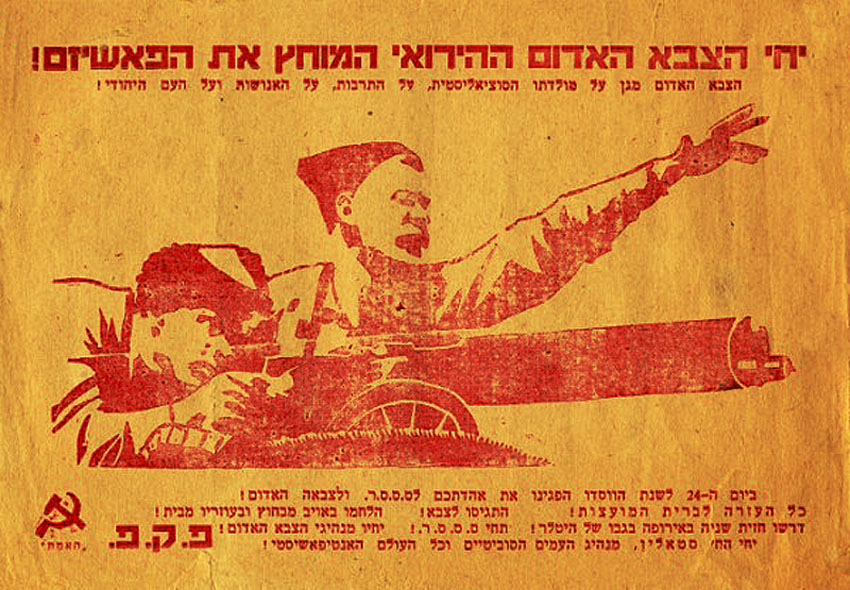
The history of humankind progressed into the twentieth century, and the global political landscape underwent tremendous changes due to World War I and World War II, with far-reaching effects that continue to the present. After the First World War, the era of colonial predatory capitalist expansion largely came to an end. Many of the modern world’s major religious issues and ideological conflicts began to manifest after World War II.
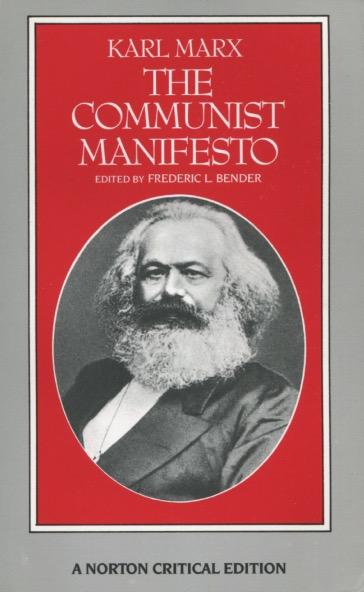
At the same time, the First World War spurred the rise of Communism in Europe, particularly following the October Revolution of the Russian Bolshevik Party in 1917, which established the first Communist totalitarian state. Historical research indicates that Communism originated from Marx’s ideas, clearly articulated in The Communist Manifesto. Later history demonstrated that the utopian Communist system, which ultimately led to slavery, carried the shadow of Marx’s manifesto.
In addition, the First World War also contributed to the expansion of Islam beyond the Arabian Peninsula, initiating malignant growth and laying the groundwork for the century-long conflicts and confrontations in the Middle East that persist today.
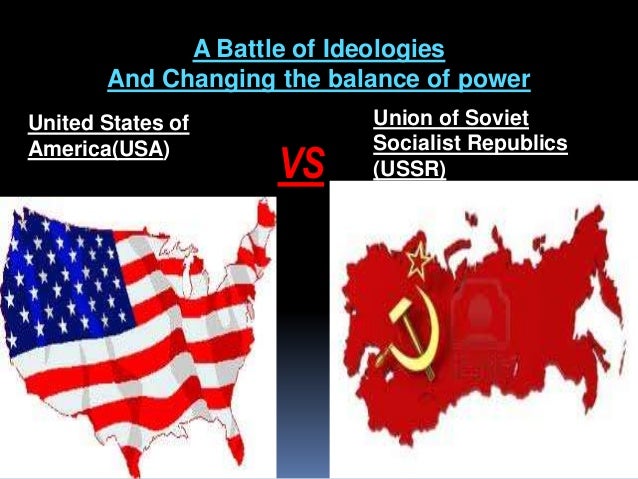
In short, since the last century, the principal global confrontations have been between totalitarianism and democracy, autocracy and freedom. The ideological roots of totalitarianism can be traced to three dominant streams: Nazism, Communism, and Islamic Fundamentalism. The Nazi, Communist, and Islamic camps, rooted in these doctrines, collectively formed a totalitarian world order.
Conversely, the energy that sustains freedom originates from unrestrained capitalism, underpinned by Christianity as its spiritual foundation. Together, these four pillars—freedom, capitalism, democracy, and Christianity—have created a vibrant and prosperous world in Western nations. Since World War II, the confrontation between these fundamentally different doctrines has shaped the ideological struggles between these two camps across the globe.
 |
| Totalitarianism and Democracy, Autocracy and Freedom |
In Chinese history, during the pre-Qin period, there were hundreds of competing schools of thought during the Spring and Autumn[i] and Warring States[ii] periods. Legalism, represented by Shang Yang[iii], gradually became the most influential governing philosophy among the rulers of various states. In modern terms, Shang Yang's Book of Lord Shang might be described as "Shangism".
After China entered the imperial era, a tradition of "honoring one school while suppressing all others" dominated for more than 2,000 years. Ancient imperial dynasties often followed the principle of "applying Confucianism to foreigners but using Legalism for Chinese subjects."
Today, the Chinese Communist Party (CCP) ostensibly demonstrates singular loyalty to Marxism. However, in practice, it functions as a Lenin-Stalin-style party-state system employing Shang Yang’s methods of governance. In this system, Marxism serves as the ideological symbol, Leninism as the organizational core, Stalinism as the operational essence, and Shangism as both a tool and an ultimate goal.
After the disintegration of the Soviet Union in 1991, the CCP avoided referencing Leninism and Stalinism, as these ideologies had been widely discredited and proven to fail. Today, Lenin and Stalin are largely denied in Russia and criticized worldwide. To maintain its grip on power, the CCP continues to display the Marxist banner, while in practice it uses commercial and bureaucratic strategies to obscure the true nature of its authority, maintaining a dictatorship that is both deceptive and self-serving.
As a result, the CCP’s party culture inevitably becomes a hodgepodge—a mixture of both Eastern and Western authoritarian traditions—blending elements that are often morally and politically questionable.
 |
| The Book of Lord Shang |
Although dynasties changed repeatedly throughout Chinese history, even when minority ethnic groups such as the Hu and Di[iv] entered the Central Plains, Confucianism and Legalism remained the rulers’ consistent tools of governance. Confucianism’s strength lay in its alignment with the divine-human order, while Legalism catered to human weaknesses and the practicalities of maintaining power.
The key difference between the current Red Dynasty and previous dynasties is its use of Dong Zhongshu’s[v] version of Confucianism—a form of Confucianism integrated with Legalist elements—which has become familiar and "native" to most modern Chinese people. In contrast, Marxism is a foreign ideology: it is not only alien but has also proven to be destructive, and acceptance is compulsory. To maintain control, the CCP has relied on intensive ideological education, censorship, and the widespread dissemination of propaganda. Although silencing dissent enables the CCP to achieve temporary stability, it has inflicted immense suffering on the Chinese populace. Over the past seventy years, many of the disasters experienced by mainland Chinese society have been directly linked to the suppression of free expression and the imposition of Marxist doctrine.
According to the Communist Party, Communism is the essence of Marxism. In other words, rejecting Marxism is tantamount to rejecting Communism. Over the past century, the Chinese people have been both practitioners and victims of this ideology. As discussed earlier, ending Marxism is ultimately essential to ending the global contest between the communist and free worlds. Only by moving beyond Marxist rule can China join the ranks of modern political civilization, allowing its people freedom of thought and the benefits of constitutional democracy.
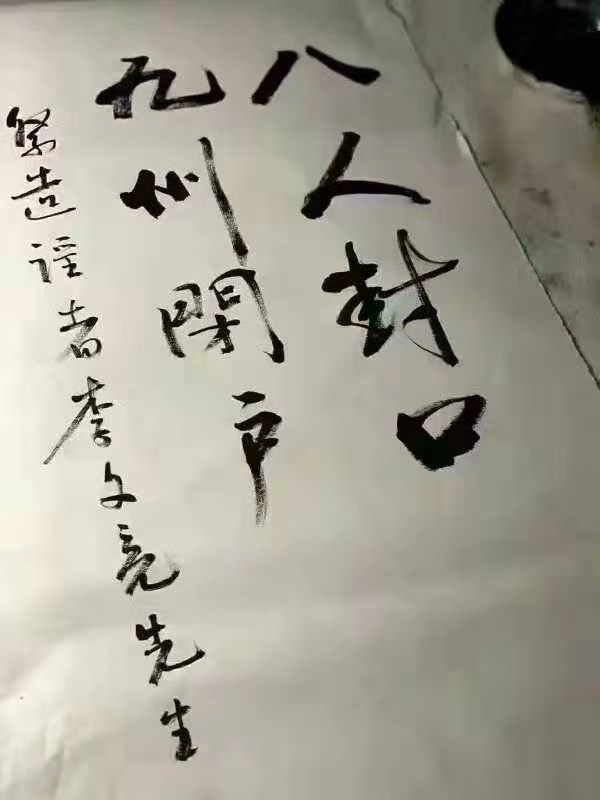 |
| Eight Voices silenced, Whole Nation locked |
In 2020, the global COVID-19 pandemic, if traced to its source, can be seen as a tragedy rooted in the long-standing Communist system. Under a communist dictatorship, with no freedom of the press or of speech, the silencing of just a few voices escalated into a national lockdown, which eventually triggered a global shutdown. What might appear as an accidental catastrophe was, in fact, entirely avoidable. In the early stages of the Wuhan outbreak, the CCP arrested doctors who tried to report the truth, suppressed information, and allowed the epidemic to spiral out of control, while shifting blame to the outside world. On the surface, this may seem like an unforeseen event, but a study of historical patterns and causality shows that such disasters were inevitable under the CCP’s system. Looking back at contemporary Chinese history—from the May 7th Anti-Rightist Movement[vi], the Great Leap Forward[vii], the Great Chinese Famine[viii], the Cultural Revolution[ix], and the June 4th Massacre[x], to the current Wuhan epidemic—how many of these tragedies were not rooted in the silencing of voices by the CCP?
Compared to biological viruses, Communism is an ideological, mental, and political virus. Its harm is profound and far-reaching. In the era of globalization, it is widely recognized that the Communist Virus has become a global scourge. Therefore, to truly say goodbye to Marxism is to eradicate the Communism Virus. Only a few socialist countries remain today, and those wishing to move beyond Marxism must first understand the origin and historical evolution of this ideological virus.
In the nineteenth century, a young Karl Marx created the “Communist Virus” based on the ideology of the Communist “Specter,” planting the seeds of a system that would manifest within a remarkably short span of human history. The First World War facilitated the rise of the Soviet Union and the establishment of the Communist International. The Second World War accelerated the global expansion of communism. Following World War II, the world polarized into two camps: the communist world and the free world.
The COVID-19 pandemic of 2020 can be regarded as the beginning of a third major transformation in the global political landscape. While the first two transformations involved hot wars and the subsequent U.S.-Soviet Cold War, this time the conflict comes in the form of a virus that knows no front or rear lines. As the United States and China enter a new Cold War, the political landscape and human lifestyle around the world will inevitably undergo profound and far-reaching changes.
It is difficult to pinpoint the exact moment when Marx’s communist “Specter” first began to wander through Europe. Nevertheless, it is clear that the earliest major hosts of the Communist ideology were Russia, followed by China and Mongolia. At that time, Mongolia was still considered part of Chinese territory under the Qing dynasty before its revolution and subsequent Soviet influence in the early 1920s. The spread of communism became evident around the time of the First World War, a period marked by global upheaval and internal fragmentation in China.
The next wave of communist expansion followed the Second World War, with Eastern Europe, North Korea, and other states coming under Soviet influence or establishing communist regimes. Later, Southeast Asian countries such as Vietnam, Laos, and Cambodia (the latter under the Khmer Rouge) became further examples of communist influence in the region. Over time, smaller countries in Africa, Latin America, and the Indian Ocean region also adopted forms of socialist or communist governance, influenced in part by Cold War dynamics between the United States and the Soviet Union.
By 2020, the global impact of communist ideology had become so widespread that the COVID‑19 pandemic was viewed by some commentators as exacerbating geopolitical tensions already in motion. In response to rising concerns about China’s global behavior, on June 4–5, 2020, lawmakers from several democratic countries formed the Inter‑Parliamentary Alliance on China (IPAC), an international, cross‑party coalition aimed at reforming the approach of democratic states toward the People’s Republic of China and the Chinese Communist Party.
The alliance, initially launched by members from eight democracies, aims to promote democratic values, human rights, and a coordinated response to perceived challenges posed by the CCP across trade, security, and human rights
 |
| Nikita Khrushchev and Mao Zedong |
For China as a whole, the first mistake in U.S. global strategy occurred in the 1940s. At that time, the CCP, then dormant in Yan’an, was still an opposition party. Nevertheless, it deceptively praised democracy, attacked the Kuomintang dictatorship, and posed as a free and modern political party, presenting itself with democratic ideals to mislead American politicians in China[xiii]. This deception led to a misalignment in U.S. policy toward China and a fundamental misjudgment of the nature of the CCP.
From a global perspective, the U.S. government also failed to fully capitalize on the outcomes of World War II. At a critical moment, it abandoned support for the Nationalist Government, forsaking the freedom and welfare of some 400 million Chinese citizens. The free world camp, led by the United States, did not fully understand the nuances of Eastern history and culture, and it missed the opportunity to implement a comprehensive global strategy aimed at completely eliminating the CCP from China and eradicating Communism. This failure allowed the Virus of Communism to expand beyond the former Soviet Union, Eastern Europe, the Northern Caucasus, Siberia, and Mongolia.
At the end of World War II in 1945, Britain—once a global empire—had significantly declined due to war fatigue and internal conflicts, while the Soviet Union had not yet emerged as a superpower. The United States, as the first true superpower, possessed atomic weapons, along with overwhelming military, economic, and political influence, giving it the capacity to enforce containment. The two atomic bombs dropped on Japan had fully broken the fighting spirit of the Japanese military government. Had the United States, Britain, and China—the “Three Great Powers”—cooperated effectively, applying diplomatic pressure and military leverage, they could have prevented the Soviet Union from sending troops into Northeast China and compelled the Japanese Kwantung Army to surrender more swiftly. From today’s perspective of Northeast Asia’s geopolitical pattern, allowing the Soviet army to occupy the region was a monumental historical mistake.

On the one hand, the final major achievements of China’s anti-Japanese war were looted by the Soviet army in the Northeast, representing a tremendous loss of the fruits of victory for China[xiv]. Furthermore, the Soviet southward advance enabled the CCP to seize advantages from the Nationalists’ wartime gains, indirectly contributing to the civil war between the CCP and the Nationalists, thereby obstructing the possibility of a peaceful reunification of the Republic of China. At the same time, the subsequent division of the Korean Peninsula, the separation of Taiwan from mainland China, and the broader geopolitical instability in East Asia created a long-lasting and difficult-to-resolve strategic risk.
The second major U.S. strategic error occurred in the 1970s. During the 1960s and 1970s, amid China’s severe economic difficulties, the CCP pursued domestic persecution campaigns to consolidate power, often disregarding the lives of the populace. Simultaneously, the party engaged in lobbying and influence operations among smaller nations in Asia, Africa, and Latin America. By 1971, the CCP successfully gained entry to the United Nations through a vote, forcing Taiwan to withdraw. Subsequently, President Nixon visited mainland China in 1972 and signed the “Shanghai Communiqué.” From a global strategic perspective, the United States had begun engaging the CCP in 1971, pursuing a divergent approach within the communist bloc to isolate the Soviet Union.
From the CCP’s perspective, Mao Zedong’s dramatic policy shift was influenced by urgent domestic and international pressures. China faced a severe political crisis following the Lin Biao incident[xv], and simultaneously, it confronted a serious military threat from the Soviet Union due to the Treasure Island incident[xvi]. These factors compelled Mao to embrace engagement with the United States, prioritizing China’s survival and strategic positioning over purely maintaining domestic political power.
 |
| Nixon and Mao Zedong |
In 1979, the United States formally established diplomatic relations with the Chinese Communist Party and severed official ties with the Republic of China in Taiwan. Once again, the United States abandoned Taiwan, a significant force opposing the communist world. Following this shift, the U.S. began supplying various resources to support mainland China’s economic development. Establishing diplomatic relations with the CCP also compressed the international operational space of Taiwan, which represents the legitimate and orthodox status of China.
On the other hand, after the Chinese Communist Party implemented economic reform and opening-up, it unscrupulously developed its economic sphere. Deng Xiaoping’s “cat theory” became the representative model of this approach. At the same time, the CCP insisted on maintaining its political monopoly, exemplified by the “Four Basic Principles”[xvii]. These two opposing economic and political policies existed within the same regime, achievable only through the sophisticated application of Legalist principles in Eastern culture. This represented the second major misjudgment by the United States regarding the CCP’s true nature.
The third U.S. strategic error occurred at the turn of the last century. Following the June 4th, 1989 Tiananmen Massacre, the U.S. government issued verbal and moral condemnations on the surface but simultaneously assisted the CCP’s economic development, ultimately enabling China to join the WTO. As a result, the CCP, the world’s largest ruling party, quickly grew rich and powerful. However, the party failed to share the benefits of development and degenerated into a corrupt bureaucracy. Leveraging advanced technology, expansive financial and material resources, and global ambitions, the CCP monitored its citizens and exported its totalitarian model abroad, even infiltrating other countries through corruption.
Western countries, including the United States, once held the self-deceptive belief that economic modernization would naturally encourage the Chinese Communist Party toward universal values. Instead, the opposite occurred. Since the 2018 revision of China’s Constitution[xviii] under Xi Jinping, CCP reactionaries have publicly abandoned the strategy of keeping a low profile and have regressed domestically while expanding influence externally. Only then did Western nations fully recognize that decades of “engagement” with China had failed entirely. This was the third serious misjudgment by the United States and other Western countries regarding the CCP, based on false expectations.
Since World War II, in the ongoing contest between the free world and the communist world, Western countries led by the United States have repeatedly made critical errors in judgment. By early 2020, the free world finally felt the consequences of seventy years of compromise, appeasement, and unfulfilled promises. Although the U.S.-Soviet Cold War ended with the collapse of the Soviet Union—securing victory for the United States—the legacy of autocracy did not vanish entirely. Russia continues to form alliances with other authoritarian regimes, threatening the constitutional civilization of the free world.
Over the past thirty years, this policy of appeasement can be summed up by two idioms: “Raising a tiger brings danger to oneself” and “Bargaining with a tiger for the price of its skin.” In the contests between the United States and the CCP, the U.S. has lost multiple rounds, with each failure more consequential than the last. Over the past decade, China and Russia have often acted in concert at the United Nations, undermining resolutions, expanding influence, and seeking global leadership. Today, China and Russia can be likened to the domineering but barbaric Qin Kingdom[xix] during the Spring-Autumn and Warring States periods, while the United States, Britain, and Western nations represent the six civilized and open states[xx]. More than two thousand years later, a prelude to a new Spring-Autumn and Warring States period is unfolding on a global scale, fueled by the forces of globalization, thrusting human civilization into a turbulent and volatile era.
Judging from the history of communism’s global expansion, the title of this book, See-through Utopia, Farewell to Marxism, conveys more than a simple farewell. Behind the apparent understatement of “farewell” lies an inevitable life-and-death struggle between two opposing social systems. This struggle has now begun. The future U.S.-China contest will inevitably enter a new Cold War, surpassing the scale of the U.S.-Soviet Cold War. While we cannot predict the ultimate outcome, the stakes are clear: if the global pandemic does not compel the United States to decisively break away from the CCP, and if Western nations continue to succumb to corrupt interests and unrealistic fantasies, the opportunities for the free world to effectively counter the CCP will be exceedingly scarce. Such a scenario would represent a profound nightmare for both the Chinese nation and humanity as a whole.
 |
| Farewell to Marxism |
Since the 2018 revision of China’s Constitution, the CCP has entered a Post-Reform-Opening-Up Era. The party-state totalitarian system has suffered a “three-abandonment” defeat:
-
Abandoning collective leadership and fixed tenure.
-
Abandoning the fundamental national policy of “one country, two systems.”
-
Abandoning the diplomatic principle of “peaceful coexistence.”
This move has plunged the Communist Party of China into the chaos of “three crises”: the ruling crisis, the Hong Kong and Taiwan crisis, and the China–U.S. crisis. The political ecology of “one dictatorship as the main focus, with hard policies as the supplement” has placed the CCP in a predicament. It cannot return to its old mode of operation during the Cultural Revolution, nor can it escape its dead end through economic reform. At the same time, it faces the dangerous situation of failing to secure peace and entering a new Cold War with the rest of the world.
Only by bidding farewell to Marxism and removing the entire ideological framework of Communism and Socialism can China achieve a peaceful rise. Only by embracing constitutionalism and universal values can the Chinese people attain genuine happiness. This path is not only the CCP’s best choice for governing China effectively, but also the only viable way forward for the nation.
[i] https://en.wikipedia.org/wiki/Spring_and_Autumn_period It was a period in Chinese history from approximately 771 to 476 BC (or according to some authorities until 403 BC, which corresponds roughly to the first half of the Eastern Zhou period. The period's name derives from the Spring and Autumn Annals, a chronicle of the state of Lu between 722 and 479 BC, which tradition associates with Confucius (551–479 BC).
[ii] https://en.wikipedia.org/wiki/Warring_States_period It was an era in ancient Chinese history characterized by warfare, as well as bureaucratic and military reforms and consolidation. It followed the Spring and Autumn period and concluded with the Qin wars of conquest that saw the annexation of all other contender states, which ultimately led to the Qin state's victory in 221 BC as the first unified Chinese empire, known as the Qin dynasty.
[iii] https://en.wikipedia.org/wiki/Shang_Yang He was an ancient Chinese philosopher, politician, and a prominent legalist scholar.[1] Born in the Zhou vassal state of Wey during the Warring States period, he was a statesman, chancellor, and reformer serving the State of Qin, where his policies laid the administrative, political and economic foundations that strengthened the Qin state and would eventually enable Qin to conquer the other six rival states, unifying China into a centralized rule for the first time in history under the Qin dynasty. He and his followers contributed to <The Book of Lord Shang>, a foundational philosophical work for the school of Chinese legalism.
[v] https://www.britannica.com/biography/Dong-Zhongshu (Born c. 179, died c. 104 BCE), scholar instrumental in establishing Confucianism in 136 BCE as the state cult of China and as the basis of official political philosophy—a position it was to hold for 2,000 years.
[vi] https://en.wikipedia.org/wiki/Anti-Rightist_Campaign It lasted from roughly 1957 to 1959, was a campaign to purge alleged "Rightists" within the CCP and abroad. It resulted in the political persecution of at least 550,000 people.
[vii] https://en.wikipedia.org/wiki/Great_Leap_Forward It was an economic and social campaign led by the CCP from 1958 to 1962. Mao Zedong launched the campaign to reconstruct the country from an agrarian economy into a communist society through the formation of people's communes.
[viii] https://en.wikipedia.org/wiki/Great_Chinese_Famine It was a period in the history of the People's Republic of China (PRC) which was characterized by widespread famine between the years 1959 and 1961.[2][3][4][5][6] Some scholars have also included the years 1958 or 1962. The Great Chinese Famine is widely regarded as the deadliest famine and one of the greatest man-made disasters in human history, with an estimated death toll due to starvation that ranges in the tens of millions.
[ix] https://en.wikipedia.org/wiki/Cultural_Revolution It was a sociopolitical movement in China from 1966 until 1976. At least 1 million people died, but some estimates go as high as 20 million.
[x] https://en.wikipedia.org/wiki/Anti-Rightist_Campaign It lasted from roughly 1957 to 1959, was a campaign to purge alleged "Rightists" within the CCP and abroad. It resulted in the political persecution of at least 550,000 people.
[xi] 《机密档案中新发现的毛泽东讲话》, < Newly Discovered Confidential Archive of Mao Zedong's Speeches >, “The Third Conversation between Mao Zedong and Khrushchev, 08/02/1958”, Edited by Song Yongyi, published in 2018, Guoshi press
[xiv] https://en.wikipedia.org/wiki/Soviet%E2%80%93Japanese_War Before leaving Manchuria, Soviet forces and bureaucracy dismantled almost all of the portable parts of the considerable Japanese-built industry in Manchuria and relocated it to "restore industry in war-torn Soviet territory". That which was not portable was either disabled or destroyed; the Soviets had no desire for Manchuria to be an economic rival, particularly to the underdeveloped Far Eastern Soviet Territories.
[xv] https://en.wikipedia.org/wiki/Lin_Biao Lin Biao became Vice Chairmen of the Communist Party of China in 1958. He held the three responsibilities of Vice Premier, Vice-Chairman and Minister of National Defense from 1959 onwards. Lin Biao died on September 13, 1971, when a Hawker Siddeley Trident he was aboard crashed in Öndörkhaan in Mongolia.

写得太好了!
回复删除